A mariners’ landing place
The very name Rotherhithe points towards the water. Long before the great enclosed docks, its river edge was tied to seafaring, landing and working boats.
.jpg) Richard Horwood map · c.1792–99 · public domain
Richard Horwood map · c.1792–99 · public domain

THE STORY OF A LONDON NEIGHBOURHOOD
Ships. Docks. Tunnels. People.
Centuries beside the Thames.
BUILT BY THE RIVER
Rotherhithe’s name is recorded by Southwark as deriving from a Saxon expression meaning a mariners’ landing place. That relationship with the water became the neighbourhood’s defining thread: ships were built and repaired here, cargoes moved through its wharves, and generations made their living from the river.
Shipbuilding was a major local industry for centuries. From the late seventeenth century, purpose-built docks expanded across the peninsula until water, timber ponds, yards and warehouses came to dominate much of the landscape.

ROTHERHITHE THROUGH TIME
The very name Rotherhithe points towards the water. Long before the great enclosed docks, its river edge was tied to seafaring, landing and working boats.
Richard Horwood map · c.1792–99 · public domain
Southwark Heritage describes shipbuilding as a defining Rotherhithe industry from the Elizabethan era into the early twentieth century.
 John Cleveley the Elder · A Shipyard on the Thames · public-domain artwork
The Mayflower was captained by Rotherhithe mariner Christopher Jones and was moored nearby before the famous 1620 voyage. Rotherhithe’s connection is strongest through Jones, the ship and its local berth.
 The Mayflower, Rotherhithe · Matt Brown · CC BY 2.0
Designed by John Wells and opened in 1700, Howland Great Dock was built to ease pressure on Deptford’s royal dockyard. Historic England records that it could accommodate 120 ships.
 Howland Great Wet Dock · 1717 · public-domain reproduction
Howland Great Dock became known as Greenland Dock through its association with the Greenland whale fishery. By the early nineteenth century, timber from Scandinavia and the Baltic and grain from Canada were increasingly important trades.
 Greenland Dock · 1927 · public domain in the UK
An Act for the canal was passed in 1801. The route to Camberwell opened in 1809, with a Peckham branch following in 1826, carrying goods inland from the dock system.
Admiralty chart · 1903 · public domain
Marc Isambard Brunel began the Thames Tunnel at Rotherhithe in 1825. After floods, financial crises and years of work, the pioneering tunnel opened to the public in March 1843.
 Thames Tunnel lithograph · Library of Congress · public domain
Three dock companies amalgamated in 1864 as the Surrey Commercial Dock Company. Canada Dock followed in 1874 as the complex continued to grow.
Admiralty chart · 1903 · public domain
The timber trade connected Rotherhithe directly with Scandinavia. Swedish, Norwegian and Finnish seamen’s missions became part of the local landscape and served visiting mariners.
 Ethan Doyle White · CC BY-SA 4.0
The dock complex was a strategic target and suffered heavy bombing. Southwark Heritage preserves photographs of fire damage in the Surrey Commercial Docks after German raids in 1940.
.jpg) Surrey Docks Fire plaque · Spudgun67 · CC BY-SA 4.0
Surrey Docks Fire plaque · Spudgun67 · CC BY-SA 4.0
The Surrey Commercial Docks closed in 1969. Greenland Dock’s final timber traffic ended around 1970, bringing the old working dock era to a close.
 Former Russia Dock · Nigel Cox · CC BY-SA 2.0
The London Docklands Development Corporation reshaped the peninsula with housing, roads and open space. Russia Dock became parkland, Stave Hill was formed in 1985, and the Surrey Quays shopping centre opened in 1988.
 Russia Dock Woodland · Robin Stott · CC BY-SA 2.0
Modern Rotherhithe and Canada Water sit over the old dock system. Greenland Dock, South Dock, Canada Water, Russia Dock Woodland and surviving dock structures make the industrial past unusually visible.
 Greenland Dock · Cnbrb · public domain
THE MAYFLOWER
Rotherhithe’s Mayflower connection is real, but it is often simplified. The ship was captained by Christopher Jones, a Rotherhithe mariner, and Historic England records that the vessel was moored nearby before the 1620 voyage.
The Pilgrim voyage itself involved several English ports before the Atlantic crossing. The most defensible Rotherhithe story is therefore about the ship’s captain, its local mooring and the maritime community that made such voyages possible.

The present Grade II* church dates from a 1714 rebuilding of the medieval parish church. Its riverside setting places it at the centre of Rotherhithe’s surviving historic core.

Rotherhithe · Christopher Jones · Mayflower
BENEATH THE THAMES

Marc Isambard Brunel’s tunnel between Rotherhithe and Wapping was the first tunnel driven beneath a navigable river. Work began in 1825 using his patented tunnelling shield, an invention that protected the excavating face and became the ancestor of modern shield tunnelling.
The project was punishing. The river broke in more than once, work stopped for years, and money repeatedly ran short. Brunel’s son Isambard Kingdom Brunel worked on the scheme while still a young engineer.
When the tunnel opened on 25 March 1843 it became a major London attraction. It later became a railway tunnel; trains have passed through it since the nineteenth century, and the route remains in use today.
A WORLD OF DOCKS
At their height the Surrey Commercial Docks covered around 460 acres and included nine docks, six timber ponds and a canal. Timber was central: huge quantities arrived from Scandinavia and the Baltic, while grain and other cargoes linked the peninsula to Canada and beyond.
The docks were not simply basins of water. They were an entire working system of lock gates, cranes, rails, capstans, warehouses, dock offices, yards and specialist labour.
PEOPLE OF ROTHERHITHE
A dockland history without the people who worked it is only half the story.

Specialist dockers carried heavy timber across their shoulders, using distinctive protective headgear. Southwark records them as one of the characteristic sights of the working docks.
Sailors, shipbuilders, lightermen, dock labourers and warehouse workers connected Rotherhithe’s streets directly to international trade.
The timber trade brought strong Nordic links. Swedish, Norwegian and Finnish seamen’s missions served mariners in Rotherhithe; St Olav’s Norwegian church was consecrated in 1927.
ROTHERHITHE AT WAR
The docks’ importance to shipping and transport made Rotherhithe strategically vulnerable during the Second World War. In 1940 German bombing caused major fire damage across the Surrey Commercial Docks.
The Thames Tunnel was treated as critical infrastructure too: wartime floodgates were installed to reduce the danger of a bomb breach flooding the transport network.
THE END OF THE DOCKS
By the late 1960s the old dock economy was in decline. The Surrey Commercial Docks closed in 1969. For a neighbourhood whose employment, streets and daily rhythms had been organised around the river and timber trade, closure meant a profound break with the past.
Large areas became derelict before redevelopment gathered pace in the 1980s. Much of the dock system was subsequently filled, leaving a scattered but unusually legible collection of basins, walls, chains, offices, slips and waterways.
FROM DOCKS TO CANADA WATER
The direct descendant of Howland Great Dock remains a major sheet of open water and one of the clearest surviving pieces of the historic dock system.
Russia Dock was converted to recreational landscape from 1980. Southwark notes that retaining-wall capstones and mooring chains still survive within the woodland.
Created in 1985 using rubble and waste material, Stave Hill now overlooks a landscape that once consisted largely of dock basins and timber ponds.
A surviving dock basin gave its name to the wider modern district. Contemporary redevelopment continues another chapter of change on the former Surrey Docks.

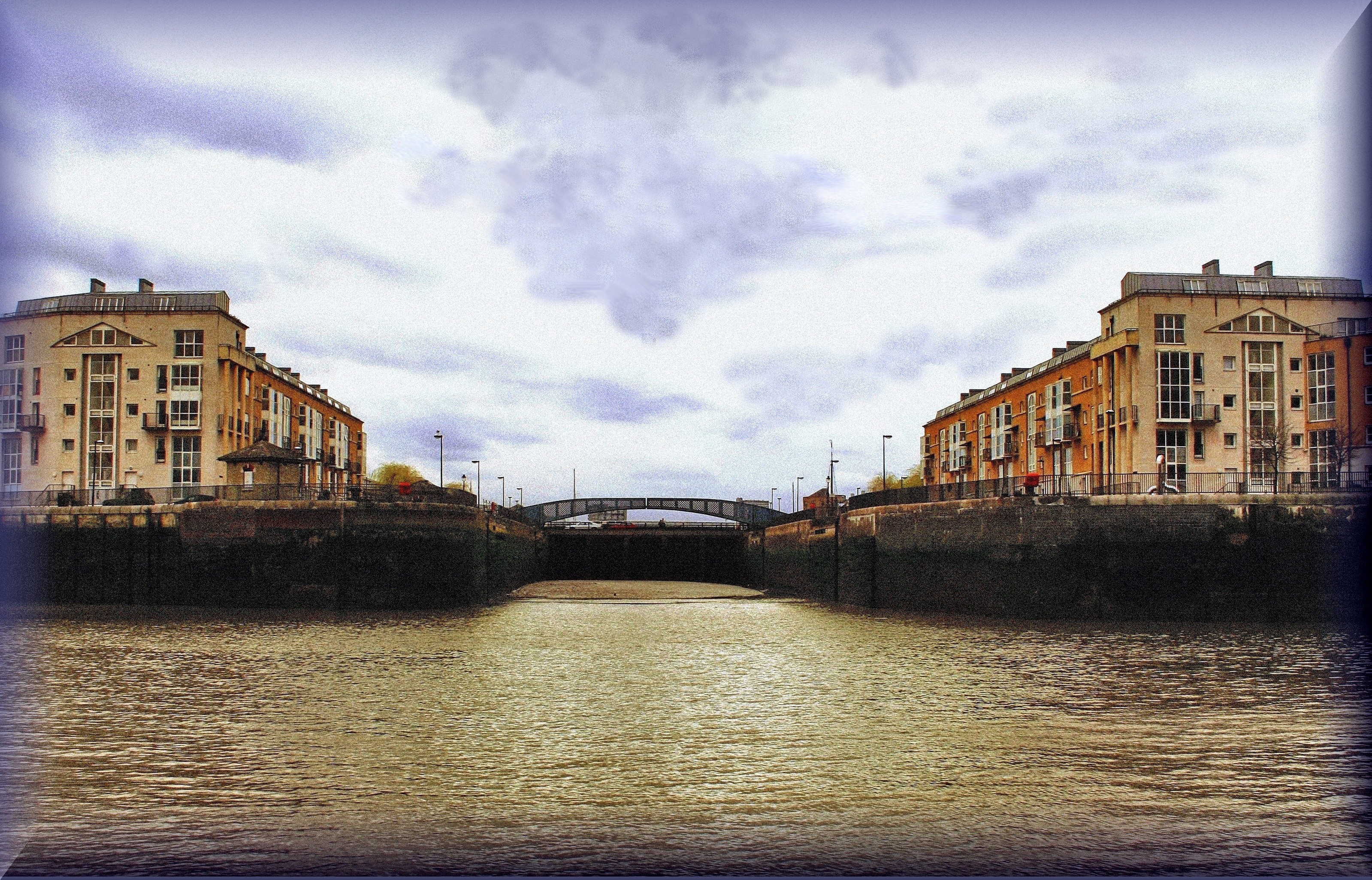
THEN & NOW
Drag the handle. Final photography should use carefully matched viewpoints rather than approximate comparisons.
NOW
Greenland Dock today
THEN
Greenland Dock · 1927
Historic image: public domain. Current image: Cnbrb, public domain. More matched viewpoints can be added once suitable reusable historic photographs are found.
HISTORIC ROTHERHITHE MAP
Explore the real Rotherhithe map. Tap a gold marker to reveal the history behind each location.
DETAILS YOU MIGHT WALK PAST
Southwark records surviving retaining-wall capstones and mooring chains within Russia Dock Woodland.

The former Dock Manager’s Office and Dock Offices survive from the 1890s and remain a tangible piece of Surrey Commercial Docks administration.

Historic England identifies the surviving warehouses around St Mary’s as one of the best remaining groups of warehouses on the Thames.

The listed Nelson Dock patent slip dates from 1855 and preserves a direct physical link with nineteenth-century shipbuilding.
PART OF THE NEIGHBOURHOOD
H’s Cafe has been serving the local Rotherhithe community since 1968 — one small part of a neighbourhood shaped by centuries of change.
Discover H’s Cafe ↗ROTHERHITHE · LONDON SE16
The ships have changed, most of the docks have gone and new streets now cross old water. But Rotherhithe still carries its history in the river wall, surviving basins, warehouses, churches, tunnel and names on the map.
SOURCES & IMAGE CREDITS
25 verified referencesHistorical research and image credits used on this page. Open the original sources for further reading and licence details.
Research note: where historical sources differ on precise closure dates, the page distinguishes the 1969 closure of the Surrey Commercial Docks from Greenland Dock’s final timber traffic around 1970.